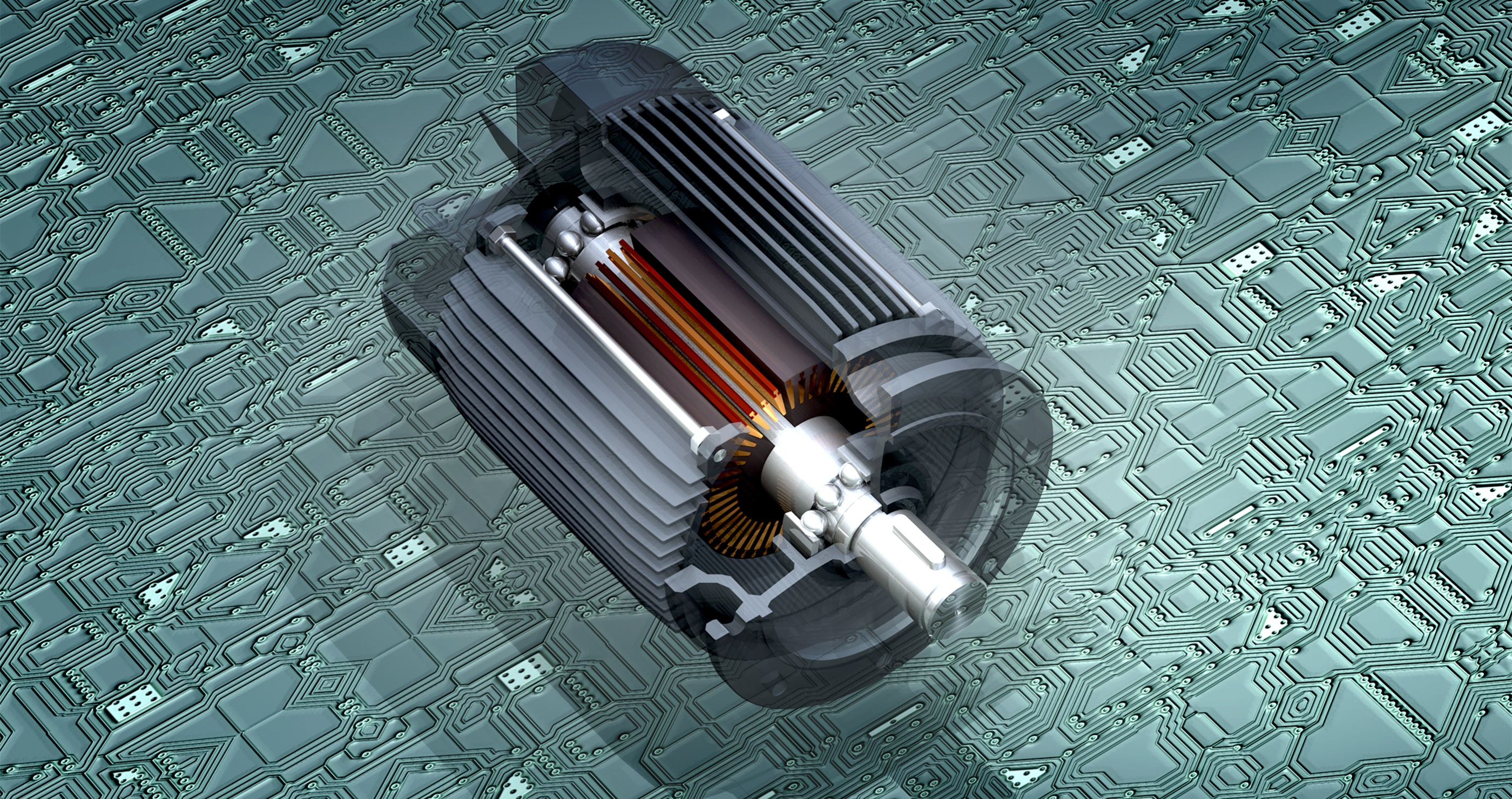
Electromagnetic engine
Jun 13 2022
engeniring, electric, engine
Recently, I have dived deep into the study of modern electric motors. I start from their structure and ending with the methods of their management. To talk about one interesting feature, you need to dive into the operation of the electric motor.
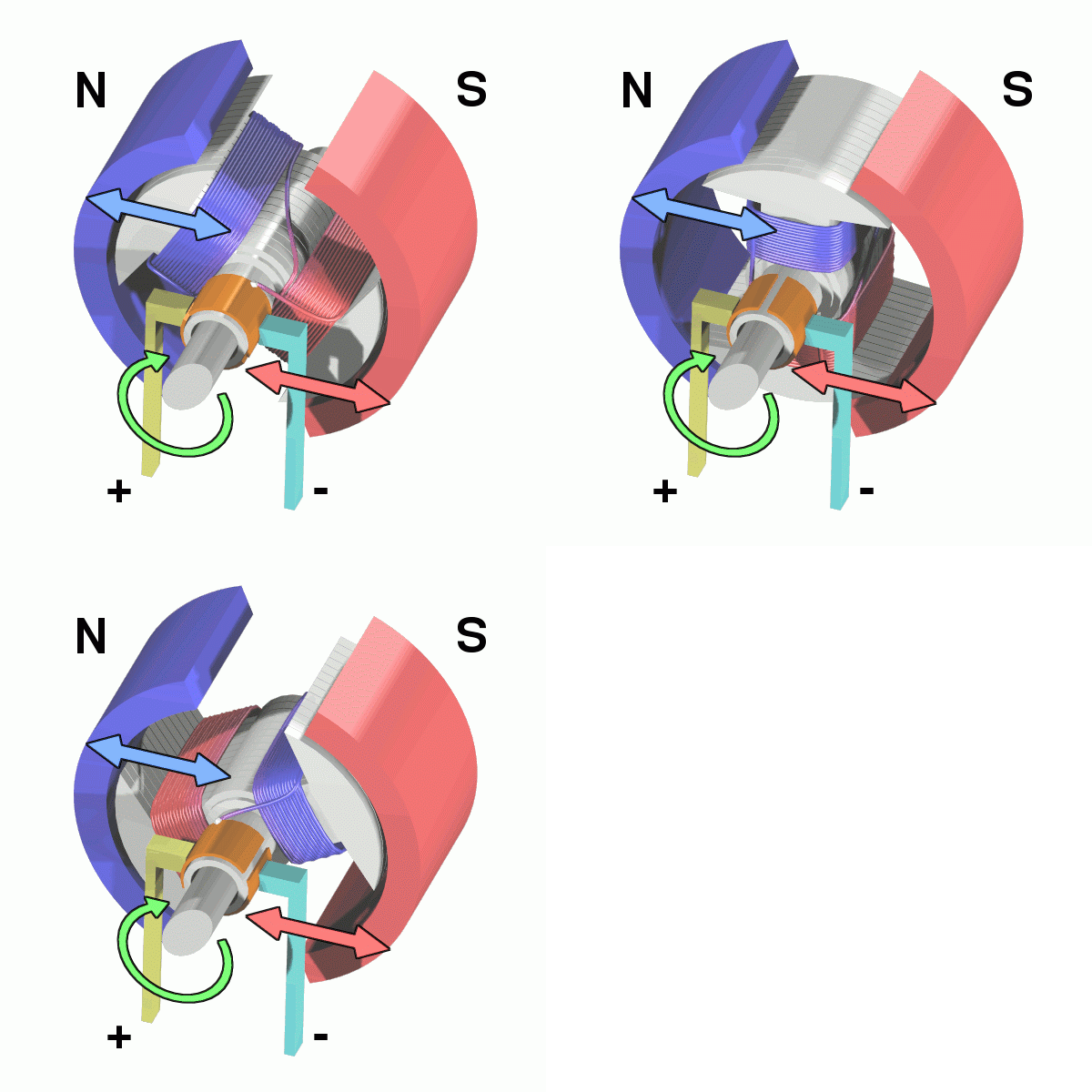
An electric motor consists of two main parts: a stator and a rotor. Stator - a fixed part of the engine, which is fixed to the bearing part of the equipment in which the engine operates. The rotor, respectively, is the moving part of the motor. The movement of the rotor is due to the effect that occurs when an electric current passes through the copper winding of the motor, which leads to the appearance of an electromagnetic (and not only) field. In the stator, there is also an electromagnetic field due to permanent magnets or an alternating one (thanks to the same windings). Opposite magnetic fields attract, unidirectional magnetic fields repel. Thanks to this, devices ranging from electric toothbrushes to electric car engines work. The only thing, the dimensions, as well as the number of phases and the presence of permanent magnets, can vary from device to device.
So, you might think that to control the speed of the electric motor, it is enough to change the current strength. After all, the higher it is, the greater the magnetic field strength, respectively, the reaction of repulsion or attraction will occur faster and stronger. But it was not there. Firstly, in a closed space, which is an electric motor, there is nowhere to dissipate the heat that will occur at high voltage. Secondly, if permanent magnets are overheated, they will lose their properties. And thirdly, a dynamic change in voltages is difficult to implement, since it is necessary to use a large number of resistors or transistors that will generate a huge amount of heat. This option is used, but quite rarely and only with small loads on the electric motor.
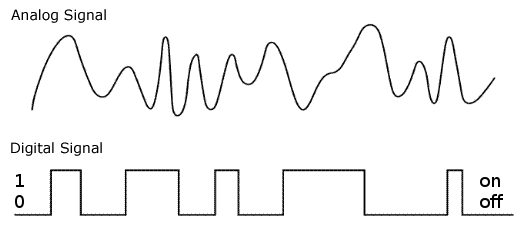
So how is an electric motor basically controlled? Everything is quite simple, thanks to the PWM signal. In essence, this signal turns on and off the motor or certain motor windings (if it has more than one phase). Thus, the winding does not have time to get very hot, just like transistors, the speed can be changed by changing the opening and closing frequency of the transistors (this was made possible thanks to the MOSFET), and the controller design has been greatly simplified and no longer requires a large heat transfer.
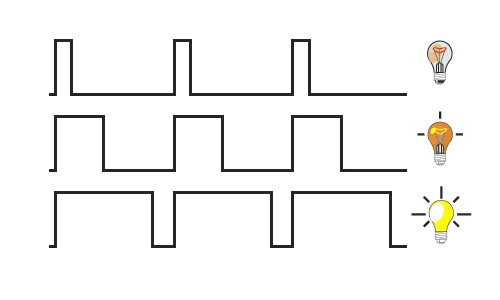
Also, thanks to the PWM signal, it was possible to save energy, as well as preserve the life of the diode lamps. After all, they do not work all the time, but flicker every 100 or more times per second.